
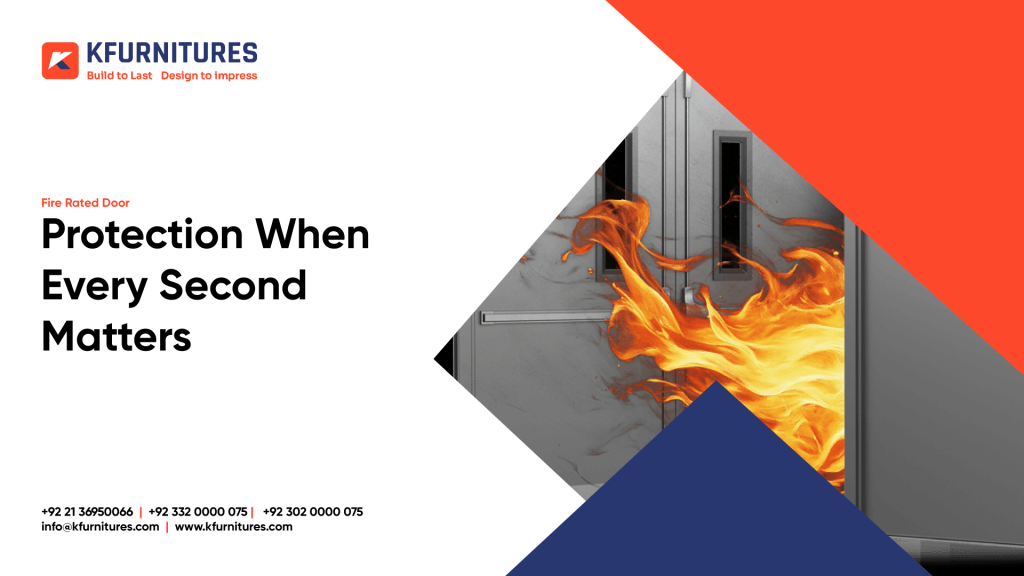
A fire rated door is a door system that has been tested and certified to resist fire for a specific period, typically 30, 60, 90, or 120 minutes. During this time, the door maintains its structural integrity and prevents fire and smoke from spreading between different sections of a building.
These doors are commonly made from steel, timber with fire-resistant cores, gypsum, or composite materials, and are installed together with fire-rated frames, seals, and hardware to create a complete fire protection system.
Key Features of Fire Rated Doors
1. Heat Resistance
Fire rated doors are designed to withstand extreme temperatures without collapsing. Their internal materials slow down heat transfer, helping contain fire within a specific area and reducing structural damage.
2. Smoke Containment
Smoke inhalation is one of the leading causes of fatalities in fires. Fire rated doors include intumescent seals and smoke seals that expand when exposed to heat, blocking smoke from passing through door gaps.
3. Certified Fire Ratings
These doors are tested according to international safety standards and receive time-based ratings (e.g., 30, 60, 90, or 120 minutes) that indicate how long they can resist fire.
4. Self-Closing Mechanism
Most fire rated doors are equipped with automatic door closers to ensure they remain shut during a fire, maintaining compartmentalization and preventing fire spread.
5. Durable Construction
Fire rated doors are built from high-strength materials such as galvanized steel, fire-resistant timber cores, and reinforced frames to maintain structural stability during extreme conditions.
Benefits of Fire Rated Doors
1. Enhanced Safety for Occupants
Fire rated doors provide extra time for evacuation by slowing the spread of fire and smoke. This critical delay can mean the difference between safe escape and dangerous exposure.
2. Protection of Assets
By containing flames within a specific area, fire rated doors reduce fire damage to equipment, documents, and infrastructure, helping protect valuable assets.
3. Compliance with Safety Regulations
Most building codes and fire safety regulations require the installation of fire rated doors in commercial, industrial, and multi-story buildings.
4. Structural Fire Control
These doors support fire compartmentation, a safety design principle that divides buildings into sections to limit the spread of fire.
5. Increased Property Value
Buildings equipped with certified fire protection systems often meet higher safety standards, making them more attractive to tenants, buyers, and insurers.
Common Use Cases for Fire Rated Doors
1. Commercial Buildings
Offices, malls, and corporate facilities use fire rated doors to protect stairwells, corridors, and emergency exits.
2. Industrial Facilities
Factories, warehouses, and production plants install these doors to separate high-risk areas and protect machinery and storage zones.
3. Residential Complexes
Apartment buildings use fire rated doors in staircases, service rooms, and parking areas to enhance resident safety.
4. Hospitals and Healthcare Facilities
Hospitals rely on fire rated doors to protect patients and maintain safe evacuation routes during emergencies.
5. Educational Institutions
Schools and universities install them in laboratories, hallways, and dormitories to meet safety standards and protect students.











 Huzefa Khambati - Partner